Why Does Andrej Karpathy Want Schools to Stop Policing AI-Generated Homework?

Hello there! I'm Jovin George, the proud founder of SoftReviewed. With over a decade of experience in digital marketing, I embarked on this exciting journey in 2023 with a clear vision – to assist software buyers in making informed and confident decisions.
At SoftReviewed, my team and I are a bunch of passionate software enthusiasts dedicated to providing honest and unbiased reviews and guides. We aim to simplify the software buying process, ensuring that individuals find the best solutions tailored to their needs and budget.
My role extends beyond founding SoftReviewed; I lead our dynamic team in reviewing, comparing, and recommending software products. From web design and development to SEO, SEM, SMM, and content marketing, I oversee it all. I'm genuinely enthusiastic about technology and software, and I love sharing my knowledge and insights with our incredible community.
If you have any questions or feedback,don't hesitate to reach out. SoftReviewed is here to be your trusted source for software reviews and guides, making your software-buying experience easy and enjoyable. Thank you for choosing us on your journey through the digital landscape.
Warm regards, Jovin George
AI and machine learning have evolved to a point where digital text can closely mimic human writing. This raises an important question: should schools continue to invest in AI detection tools when even experts like Andrej Karpathy warn that these tools are inherently flawed?
Karpathy's Warning Against AI Detection Tools
Andrej Karpathy, known for his pioneering work in AI, famously stated that 'you will never be able to detect the use of AI in homework. Full stop.' His assertion challenges the reliance on software that promises to catch AI-generated content, yet often ends up catching innocent students instead. The increasing sophistication of AI means that detection methods struggle to keep pace with the technology they are meant to police.
Challenges with AI Homework Detectors
AI detectors are facing significant challenges. Studies indicate that these tools can generate high false positive rates, sometimes even affecting non-native speakers and students with unique writing styles. Moreover, simple tactics like paraphrasing or using multiple AI models can easily bypass these systems.
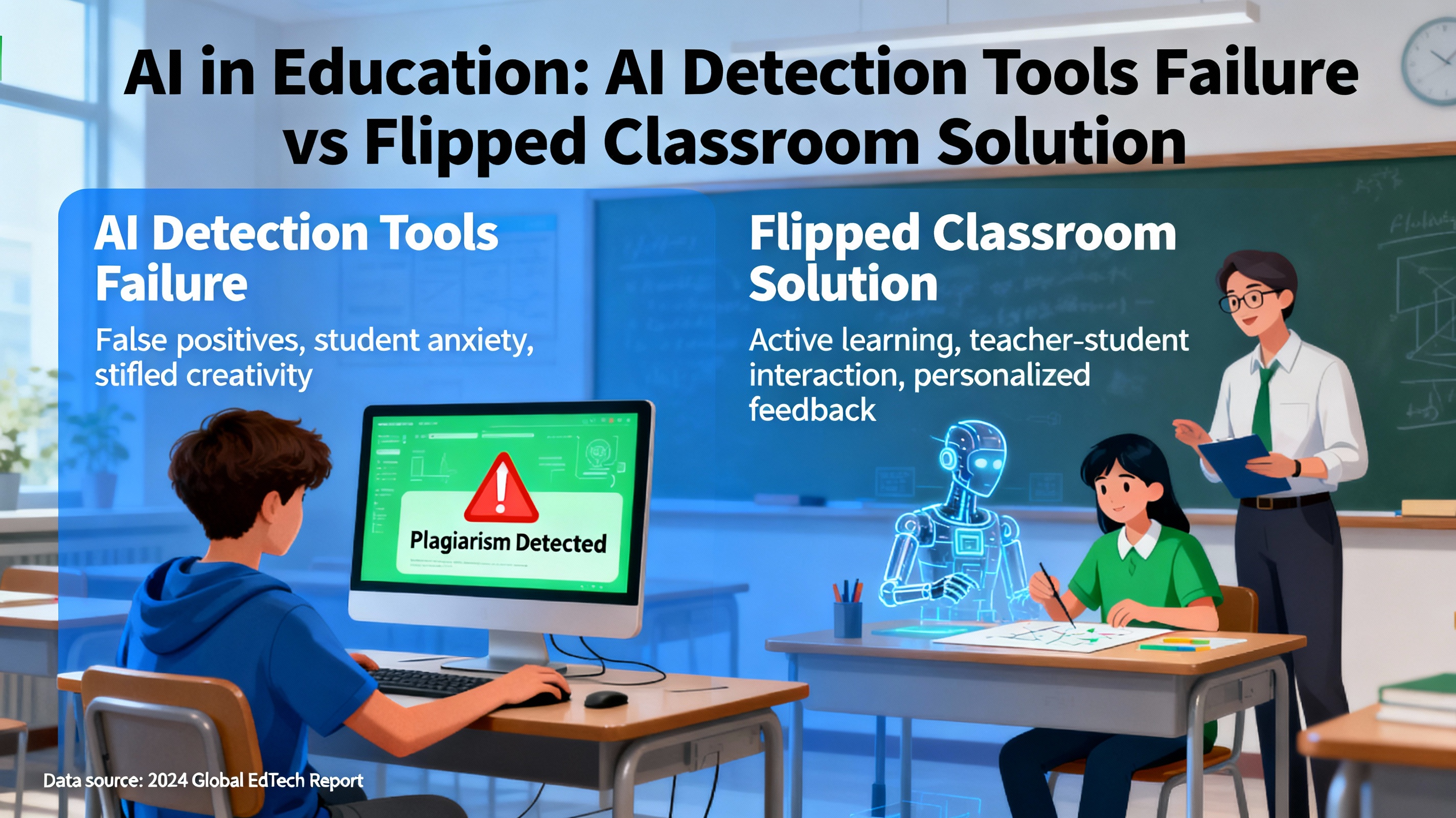
The core issues can be summarized as follows:
- High False Positives: Innocent students can be mistakenly flagged for using AI.
- Workarounds Easily Found: Students can modify AI-generated text to avoid detection.
- Continuous Improvement of AI: As AI gets more advanced, detection tools lag behind.
Below is a brief comparison outlining the impact of these challenges:
| Issue | Impact |
| False positives | Innocent students wrongly accused |
| Emotional distress | Anxiety and loss of trust |
| Unequal targeting | Disproportionate effects on non-native speakers and neurodivergent students |
| Verification load | Additional burden on teachers to confirm cases |
A Shift Towards Classroom-Based Assessments
Instead of persisting with a flawed detection system, Karpathy suggests that schools reconsider how they assess student performance. Shifting graded work back to classroom settings helps ensure that assessments truly measure a student’s understanding. This method emphasizes direct, supervised evaluations that reduce the chance for AI interference.
Key benefits of classroom-based assessments include:
- Direct Monitoring: Teachers can observe the student’s problem-solving process.
- Real-Time Feedback: Immediate interactions help clarify misconceptions.
- Enhanced Integrity: In-person tests minimize the misuse of AI tools.
This approach also reinforces a critical balance for students—they learn to use AI as a helpful assistant while still mastering fundamental skills without over-reliance on automated support.
Practical Strategies for Educators
Educators are encouraged to redesign their assessments. Here are some actionable strategies:
- In-Class Tests: Move major assessments to supervised environments.
- Oral Examinations: Ask students to explain their reasoning verbally.
- Group Projects: Encourage collaborative work that proves interpersonal and analytical abilities.
- Process Portfolios: Have students document their work process, showcasing drafts and revisions.
- AI Literacy Training: Teach students how AI works along with its limitations so they can critically evaluate its output.
By shifting the focus from catching AI misuse to encouraging genuine learning, schools can create an environment where technology is used responsibly and effectively.
Rethinking the Future of Assessments
Karpathy's message is clear: the battle against AI-generated homework is not just about detection, but about rethinking educational assessment. The goal for educators should be to enable students to become proficient users of AI while also ensuring they can perform independently when required. This dual competency is essential for equipping the next generation with the skills needed for a tech-infused future.
A move away from heavy reliance on AI detection towards more authentic, supervised assessments may well be the key to maintaining trust and integrity in academic evaluations.